How Do Tasmanian Devils Help The Environment
Tasmanian devils live across Tasmanian in most landscapes including our wilderness area National Parks forest farmland and coastlines. Devil Ark will support a healthy population of up to 500 endangered Tasmanian Devils safe from the fatal Devil Facial Tumour Disease that has almost wiped out the species on the island.
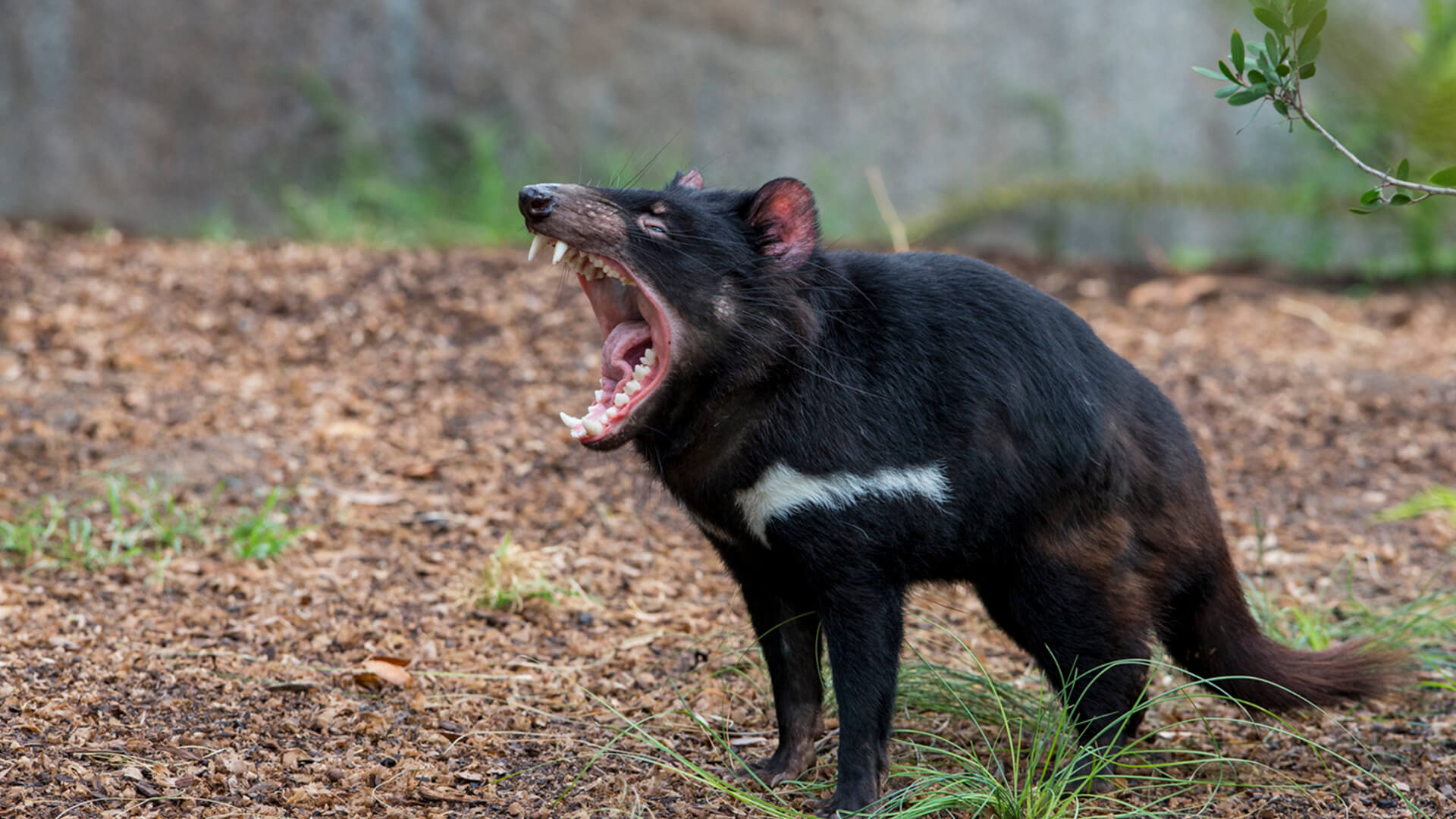
Tasmanian Devil San Diego Zoo Animals Plants
Tasmanian devils occupy a very unique niche in their environment.

How do tasmanian devils help the environment. Tasmanian Devils are mainly scavengers feeding upon the carcasses of dead animals but can also be effective predators. As such one of the challenges for the Save the Tasmanian Devil Program is the management of the ecological impacts of a reduced devil population and the minimising of adverse repercussions. So what would happen if the species become extinct.
This means the Tasmanian Devil can adapt to the environment and wont get hungry. The Tasmanian Devil adapts to the environment by their diet. Tasmanian devils are capable of swimming but do so very low in the water with only their head exposed.
Tasmanian devils like any other animals have unique adaptations that allow it to survive in its environment. Tasmanian devils play an important role within the Tasmanian landscape and specifically its ecosystem. The first part of its scientific name Sarcophilus is a combination of a couple Greek words.
Tasmanian devils play an essential role in keeping the ecosystem of the state in balance where they belong to the top of their food chain. The whiskers can extend from the tip of the chin to the rear of the jaw and can cover the span of its shoulder. Experts have predicted that the Tasmanian population may be ex.
Hundreds of years ago Tasmanian devils not only lived in Tasmania but also on the Australian mainland. In farming areas they are also known to feed upon the carcasses of sheep and cattle. The second largest threat to devils is roadkill with a minimum of 350-450 devils killed each year according to Dr Fox from Save the Tasmanian Devil Programme STDP.
A Tasmanian Devils scientific name is Sarcophilus harrisii. This alternation in the genome of the Tasmanian devil has allowed future offspring to become more immunologically resistant to the tumor trying to fight off its progression in the Tasmanian devil. Tasland 16 July 2018.
How does the Tasmanian devil affect the environment. Tasmanian devils on mainland would reduce feral cats and foxes study finds Ecologists from University of NSW say reintroducing devils to Australian. They are assisted by numerous adaptationsThe most noticeable adaptation of.
The most surprising thing is how quickly this change has occurred as the animal is evolving to fight of the threats to its potential extinction. Their source of food includes wallabies small mammals birds reptiles amphibians and insects. Devils play an important role by eating sick and dead animals.
These help the devil locate prey when foraging in the dark and aid in detecting when other devils are close during feeding. Wild Tasmanian devils can only be found in Tasmania Australia. However if they have young in the pouch they avoid swimming for more than very short distances.
Providing essential habitat and security to some of Tasmanias most endangered animals is just one of the reasons the Tasmanian Land Conservancy TLC believes passionately in securing long-term protected reserves. Sometimes even in our suburbs. Tasmanian devils have strong jaws enabling it to devour the carcass of an animal completely leaving behind no trace for predators to follow.
Currently Devil Ark has over 50 of the entire mainland population. They probably also help to control feral cats in Tasmania and by doing so they help to protect some of our native species particularly birds. Tasmanian devils low genetic diversity and previous population declines were driven by climate change rather than hunting or a rampant facial tumour disease new research has found.
T hey certainly are. The Tasmanian devil is one of the most intriguing of these unique animals. Tasmanian devils love water and will wade and splash about even sitting or lying down in it to stay cool.
Largest predator in devils ecosystem is the Tasmanian wedge-tailed eagle Aquila audax fleayi which competes with scavenging devils Owen Pemberton 2005 When Tasmanian wolves Thylacinus still existed prior to the species extinction in 1936 they shared the role of top predator with Tasmanian devils Jones 2003. This refers to these animals love for eating meat. Tasmanian devils decrease blow fly numbers by cleaning up carrion and dead animals from the.
Scientists have argued that earlier beliefs that the Tasmanian devils posed significant threat to livestock were not only overestimated but also misplaced. Sarc means flesh and philus philo means love. My first example is that the Tasmanian Devils are mainly scavengers feeding upon the body of dead animals but can also be active predators.
They are sometimes called bear devils because they look like miniature bears.
Tasmanian Devil Facts Photos Bush Heritage Australia
Belum ada Komentar untuk "How Do Tasmanian Devils Help The Environment"
Posting Komentar